Before You Become a Fashion Designer: Between Freedom, Creativity, Beauty and Reality
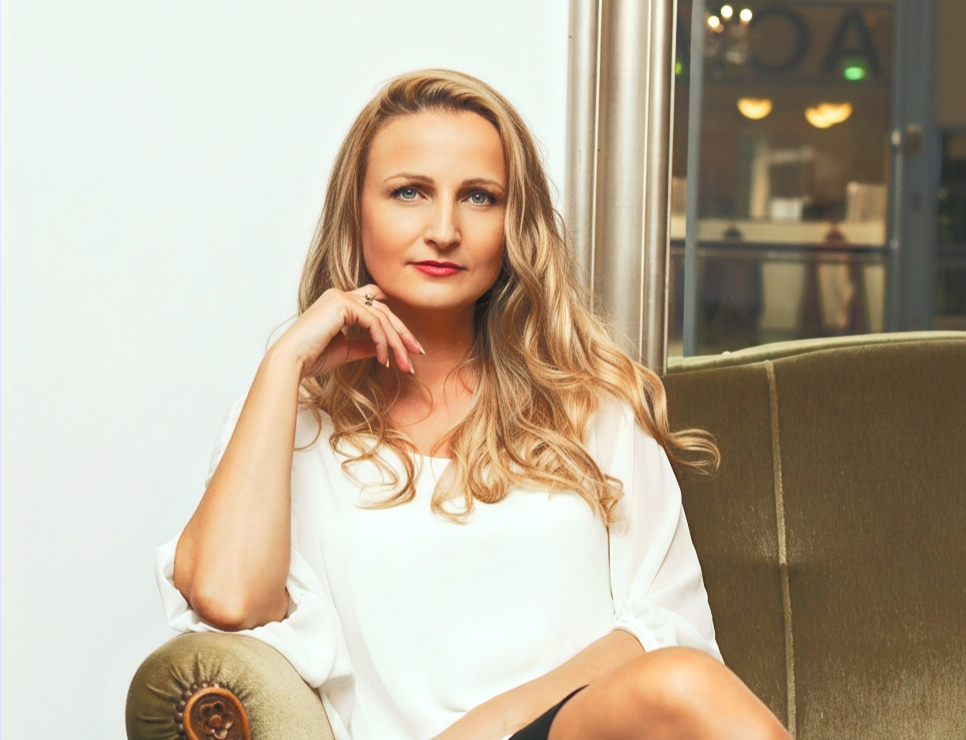
After more than thirty years in fashion, I reflect on what makes this profession beautiful, what makes it painful, and why a creative person can never truly walk away from it.
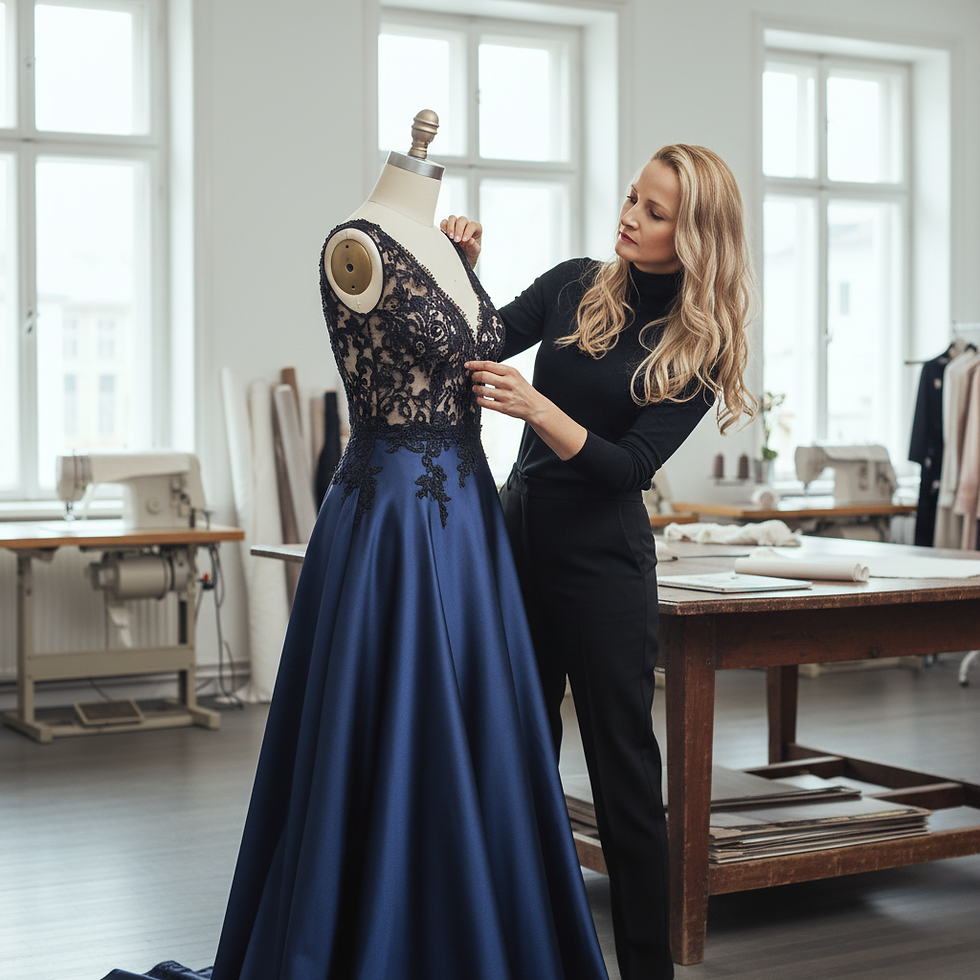
If a young woman came to me today and told me she wanted to become a fashion designer, I would probably let her talk first. I would want to know what draws her to fashion, what she imagines this profession to be, and whether she longs for the actual process of designing, or perhaps more for the world that surrounds it.
Then I would want to tell her something that perhaps is not said often enough at the beginning:
Fashion design is a beautiful profession, but it is not an easy life.
From the outside, fashion often looks like a world of prestige, beautiful clothes, fashion shows, lights, photographers, media, freedom and luxury. You see a finished garment walking down the runway, hear the applause, and it is easy to imagine that the life of a fashion designer is primarily about creativity, recognition and doing things your own way.
All of that is true — just not the whole story.
Creating Something That Did Not Exist Before
One of the most beautiful things about this profession is the possibility of creating something that did not exist before you.
A piece of fabric, a drawing, an idea or even a very vague vision can become a real garment with its own shape, movement, character and life.
You can develop your own aesthetic, search for your personal signature and decide which direction your work will take. For someone who is genuinely creative, that is an enormous gift.
But creativity also has a darker side.
You cannot simply switch it off at the end of the working day. A designer does not look at fabric merely as material. Often, they immediately see a dress, a silhouette, a detail or the way it might move on the body. Inspiration keeps arriving, and the mind continues working even when it should be resting.
And because there are usually not too few ideas, but far too many, another problem arises: not every idea can be transformed into a product that will actually sell.
That is the moment when creativity begins to meet economics.
Freedom That Comes With Responsibility
A fashion designer has an enormous amount of freedom. They can decide on their aesthetic, their brand, their way of working and the world they want to create.
But the greater the freedom, the greater the responsibility.
There is no one standing behind you to tell you how many designs you should create, which materials to choose, what will sell, where to take the brand next or what to invest in. You have to make these decisions yourself — and live with their consequences.
And this is precisely where a creative profession also becomes a business.
Suddenly, it is no longer only about what you want to create, but also about how to build a brand for the long term, how to present it to people, how to organize production and how to make all of these activities economically sustainable.
A fashion designer is therefore not simply a creator. They are also someone who has to think constantly about the future of their own brand.
Why Is Originality So Expensive?
When people look at the price of an original or couture garment, they may sometimes feel that they are paying primarily for the designer's name. In reality, the economics behind such a garment are considerably more complex.
Its creation involves not only the materials and the designer's work, but also the people involved in its production, pattern cutting, fittings and alterations, photography, models, makeup artists, space, rent, retail, sales staff, transportation, travel, marketing, the website and the presentation of the brand. These are all costs that are not immediately visible in a finished dress.
In mass production, the economics work very differently. The first sample may be expensive because it includes development, pattern cutting, fittings and a whole range of other costs, but if hundreds or thousands of pieces are subsequently produced, those costs can be spread across the entire production run.
With designer fashion or couture, the situation is the opposite. A designer may create a single original garment or only a very small series, which means that the costs cannot be distributed across a large number of products.
That is one of the reasons originality is so expensive.
Not because an original garment has to be expensive simply because of the designer's name, but because a single piece carries the entire process of its creation within it.
The price is therefore not determined only by the amount of fabric or the hours spent at the sewing machine. It also reflects the very fact that something is created once, individually, without the possibility of spreading its costs across thousands of other pieces.
The Fashion World Creates an Illusion of Wealth
Perhaps this is why the world of fashion designers can sometimes look rather distorted from the outside.
A beautiful presentation looks expensive. Luxury materials look expensive. A fashion show looks expensive. A showroom, photography and media coverage create an impression of success and substantial financial resources.
The reality of a small independent fashion brand, however, can be completely different.
A fashion designer often has to consider every investment very carefully and find ways to achieve as much as possible with limited resources. Large fashion houses have teams, budgets, investors and sponsors. A small brand may have none of that behind it.
And that is precisely why it is dangerous to confuse the image of a brand with its economic reality.
The fact that a brand looks luxurious does not necessarily mean that there is substantial financial capital behind it.
A Fashion Show Is a Moment. A Collection Is the Work That Remains.
A fashion show is one of the most beautiful moments in the creative process. The lights, the music, the models, the atmosphere, the audience, the photographers — and finally, the applause.
But the fashion show itself is not yet a commercial result.
After it is over, the collection remains, and the designer has to make sure that the individual pieces find a life beyond the runway.
Some will find their customers, others will take longer, and some may never find one at all. And this is where the difference between fashion as a visual experience and fashion as a business becomes clear.
A garment that works perfectly on a runway is not automatically the ideal product for a real customer. Runway collections are created for particular proportions, an atmosphere and an overall visual statement. Real women have different bodies, different needs and different ways of wearing clothes.
A fashion show can therefore be a complete success — and yet the real work of recovering the costs has only just begun.
Fortunately, the Client Is Something Entirely Different
One of the most beautiful parts of this profession, for me, is people.
A client who comes to a designer is usually not simply looking to buy a garment quickly. They come because they already understand why they want an individual approach and why they do not want to wear something that a hundred other people are wearing.
That can lead to very beautiful relationships.
Over the years, you meet many interesting people, and some encounters gradually grow into friendships. You become part of important moments in your clients' lives, and they, in turn, become part of your professional life in their own way.
Most of the time, that is a great joy.
A designer wants the client to be happy and tries to do everything possible for them. At the same time, however, the designer is also creating according to their own vision. And let's be honest — it feeds the ego a little, too.
When you have a certain vision in your mind and manage to translate it into reality exactly as you imagined it, it is an enormous source of personal satisfaction.
And that is where the magic of couture lies.
The client receives something that belongs to them, while the designer is given the opportunity to create something that is truly appreciated.
Of Course, Difficult Periods Will Come Too
No long professional journey consists only of successes.
There will be periods when a collection does not work as you expected, when something needs to change, when a particular path leads nowhere, or when you simply have to ask yourself whether the way you are running your brand is still the right one.
That is not necessarily a sign of failure.
It is part of long-term work.
A fashion designer has to be prepared to respond, to think differently and, sometimes, to let go of an idea they once believed in. They have to learn to distinguish between the moments when they need to persevere and those when they need to change direction.
The ability to begin again can be just as important in this profession as talent itself.
What This Profession Can Give You
Despite all these challenges, fashion design has one enormous advantage: it constantly develops you as a person.
It teaches you independence, decision-making, responsibility and improvisation. It teaches you to solve problems you could never have imagined in advance, and to accept the fact that not every idea will be successful.
Over time, you develop your own signature, as well as a certain kind of confidence that is not based on what other people say about you, but on years of your own work.
And then there is something that perhaps cannot be measured at all.
People.
Clients, collaborators, friends and all kinds of encounters that your life would probably never have brought you without this profession.
And, of course, the act of creating itself.
The feeling that something exists because of you, that there is now a garment that did not exist before, that it becomes part of an important moment, and that it carries within it a piece of your thinking, your taste and your time.
Would I Do It Again?
I cannot answer that with a simple yes.
Not because I regret my professional journey. Rather, because after so many years, you understand much more precisely what this path really means.
You know that creativity is beautiful, but demanding. That freedom is wonderful, but comes at a price. That originality has value, but creating it is neither cheap nor simple. And that the beautiful image of the fashion world is only one side of a much larger story.
And yet, there is something that does not change with time.
A creative person needs to create.
You may know perfectly well that there are easier and more predictable paths. You may calculate all the risks and tell yourself that it would be more practical to devote your time to something else.
But if you have a genuine need to create, you will eventually return to it.
Because creating is not merely a job. It is a way of thinking, a way of seeing the world, and for many creative people, a part of who they are.
And that is why I would not tell a young woman considering this profession either, “Go for it,” or “Don't do it.”
I would tell her:
First, find out whether you truly need to create. And then make sure you understand the price you will pay for having that freedom.
Because if it is only the glamour of fashion that attracts you, you still have time to choose another path.
But if what draws you is the need to create, to find your own signature and to turn your ideas into reality, then you may discover something important:
Some professions are not entirely chosen by us. Some simply find us.


Comments