Your Imperfection Is Your Most Luxurious Signature
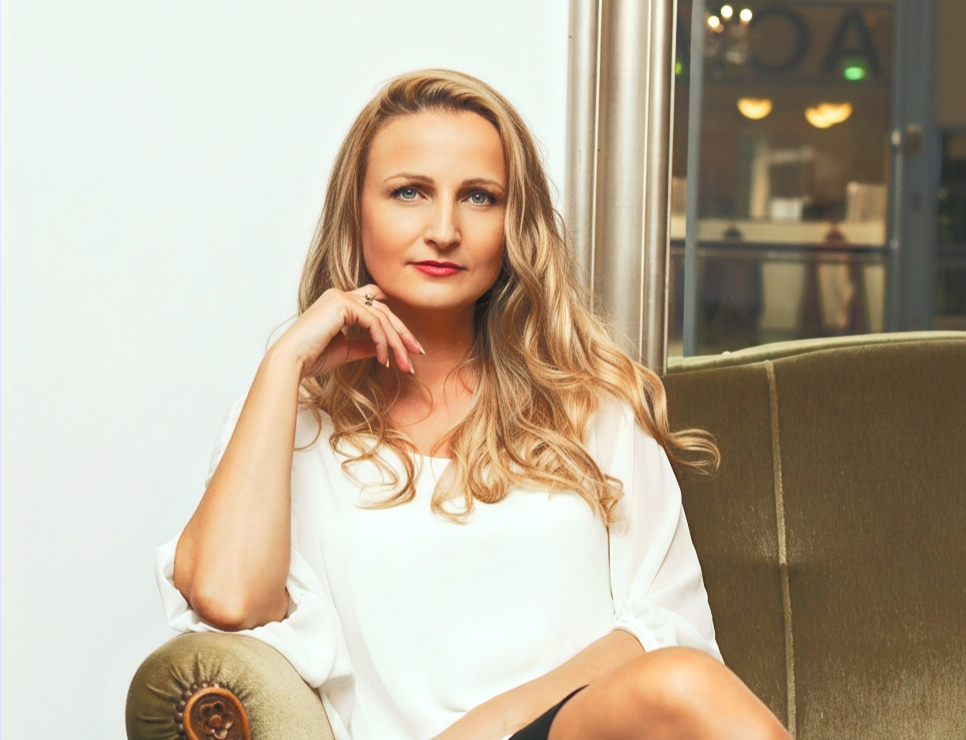

Over more than thirty years as a fashion designer, I have met women of all ages, with all kinds of bodies, proportions and life stories, and working with the female figure has always fascinated me. Not because I wanted to find something that needed to be corrected, but quite the opposite: I have always enjoyed finding ways to use cut, fabric, colour and proportion to emphasize what is beautiful and interesting about a particular woman, while allowing the things she may feel less comfortable with to recede into the background.
Couture has enormous power in this respect. Clothing can alter the proportions of a silhouette, create the illusion of longer legs, a more defined waist or a more elegant shoulder line; it can draw attention to one part of the body while allowing another to become less prominent. Yet over the years, I began to notice something that eventually interested me even more than the work itself of shaping a garment.
Women often come to me not only with their actual bodies.
They also come with an idea of their bodies.
And the two can be surprisingly different.
What a Woman Sees as a Problem
How many times have I heard phrases such as: “I can’t show this,” “My shoulders are too broad,” “My hips are too prominent,” “I don’t have a waist,” or “My arms are ugly.” And yet, sometimes I would look at the woman standing in front of me and simply could not see the problem she was describing. I saw beautiful posture, interesting proportions, a distinctive silhouette, an elegant neck, strong shoulders, long legs or a characteristic face that gave her a sense of individuality.
She, however, saw something completely different. She saw a list of imperfections she had created over the years, a list that had become so deeply fixed in her mind that she no longer questioned whether her own judgement was actually objective.
It was in these moments that my work began to take on another dimension. It was no longer simply about designing a beautiful dress; it was also about helping a woman, even for a moment, to see herself through someone else’s eyes and showing her that what she perceived as a problem might actually be one of her most distinctive and interesting features.
And sometimes it was fascinating to see how difficult it was for her to believe that different perspective.
We Are Too Critical of Ourselves
I think women sometimes have an extraordinary talent for finding everything about themselves that is not perfect. As we grow older, the list of things we would like to change can become longer and longer – younger-looking skin, a different waist, smaller hips, different proportions, fewer wrinkles, a different hair colour, or simply the feeling that we should look somehow different from the way we actually do.
And yet, we often overlook something far more important: what we radiate.
When we meet someone, we rarely walk away with a precise list of their physical proportions, remembering whether their hips were two centimetres wider or whether they had a few more wrinkles than someone else. What stays with us is usually the overall impression – their energy, their eyes, the way they moved, the way they laughed, the way they spoke to us, and above all, the way they made other people feel in their presence.
This intangible part of our personality can have far more power than our attempt to achieve some abstract idea of perfection.
And perhaps it is one of those things we only begin to understand later in life than we would like.
Who Decided What Perfection Is?
We often speak about beauty as though there were some universal definition that could tell us quite precisely what is beautiful and what is not. But is there?
If we look at different countries, cultures and historical periods, it becomes very clear that it is not so simple.
The ideal of female beauty has constantly changed throughout history, and what is considered beautiful in one place may not be regarded as the same ideal somewhere else. Body proportions, skin tone, body shape, hairstyle, makeup, and even our idea of what appears feminine or attractive can differ enormously from one culture to another.
Even beauty pageants, which attempt to present a certain image of universal beauty, reveal, when we look more closely, just how different our ideas about femininity and attractiveness can actually be.
So what is perfection?
Perhaps it is simply a very fluid concept that we have learned to accept as a fact, even though its definition constantly changes according to time, place, culture and personal preference.
And perhaps we should therefore be careful about changing ourselves in pursuit of it.
Imperfection Is What Makes Us Different
I have never considered the most interesting women to be those who perfectly matched some universal ideal of beauty. I have always been much more drawn to women who possessed something of their own – a distinctive feature, an unusual silhouette, a striking face, a particular way of moving, or simply a personality that could not be overlooked.
That, to me, is what makes fashion so beautiful.
Well-designed clothing should not transform a woman into someone else, and certainly not create another copy of a predetermined idea of beauty. I believe its purpose is to allow the woman herself to stand out, so that her personality is not lost inside the clothes but is given room to express itself.
That is why I have never been particularly interested in dressing women according to simple rules such as “this body type can wear this” and “that body type should avoid that.”
Rules can be useful as a starting point, but the moment they become dogma, I believe they begin to work against fashion rather than for it.
Personality is more important than a chart of proportions.
Sometimes the very thing that, according to all the rules, we are supposed to hide is precisely the thing worth showing.
Couture Is Not About Perfection
Perhaps this is why I still find couture so fascinating. Couture can respect a person exactly as she is, because the garment is not created for an abstract ideal of the female body, but for a particular woman – her proportions, her movement, her personality and her way of life.
The cut adapts to the woman, rather than the woman having to adapt to the cut. The fabric works with her, colour can support her expression, and the proportions of a garment can create harmony without pretending that her body should be something different.
And sometimes the most beautiful thing is precisely the thing we would try to hide according to today's ideas of perfection.
Throughout my career, I have become convinced many times over that a woman does not need to become more perfect. Perhaps she simply needs to look at herself differently – with less criticism, with greater curiosity, and perhaps even with a little admiration.
Because our “imperfections” are not necessarily flaws that need to be removed. They can be our personal signature, something no one else possesses in quite the same way, something that makes us an individual rather than simply another variation on a predetermined ideal.
At a time when we are increasingly trying to move closer to a universal image of beauty, our individuality may be the most valuable thing we have.
It cannot be replicated.
It belongs only to us.
And that is precisely why I believe we should stop trying so hard to hide it.
Imperfection may be the most luxurious element of our personality.
It is our own, inimitable signature of individuality – something that cannot be bought, manufactured or perfectly reproduced.
And perhaps that is exactly why we should learn to treasure it much more.



Comments